


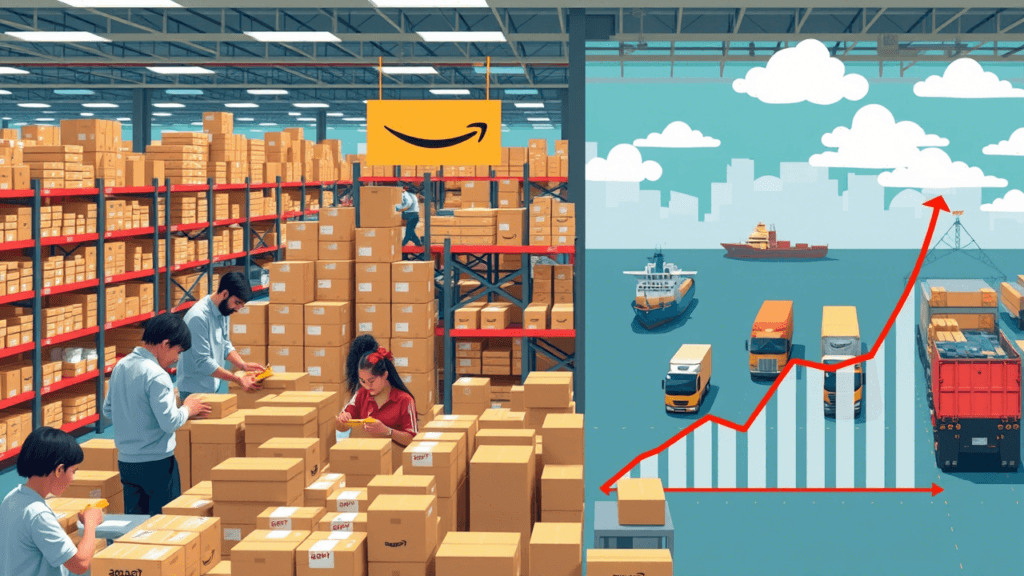
Amazon’s Global Scale Shields It From Tariff Shocks
As global trade tensions escalate, particularly with the United States imposing 145% tariffs on Chinese imports, many businesses are scrambling to recalibrate. However, Amazon (NASDAQ: AMZN) stands in a position of relative strength. Despite short-term stock volatility, Amazon’s scale, global logistics infrastructure, and diversified revenue streams make it better prepared than most to weather the storm.
With over 25% of its direct product sales sourced from China, Amazon is certainly exposed. Yet, its global supply chain, deep vendor relationships, and strategic foresight offer options that many competitors simply do not possess.
Strategic Inventory Moves Ahead of Tariffs
Amazon took decisive action before tariffs hit. CEO Andy Jassy confirmed that Amazon stockpiled inventory ahead of tariff implementations, minimizing the initial shock of rising costs. This proactive move speaks to the company’s financial flexibility and operational agility.
Moreover, Amazon has already cancelled some vendor orders from China, signaling a shift in supply chain strategy. With operations that span continents, Amazon can relocate sourcing and production to less-impacted regions, helping it maintain product availability and pricing stability.
Supplier Leverage and Cost Control
One of Amazon’s greatest advantages is its immense bargaining power. Few companies can negotiate with global suppliers the way Amazon does. With its massive purchasing volumes, the company can demand better terms and absorb cost pressures more effectively than smaller rivals.
According to analysts from Truist, this leverage may even allow Amazon to gain market share while others are forced to raise prices or reduce inventory. Amazon can keep prices competitive, which is crucial when consumers are tightening their wallets amid economic uncertainty.
Retail Isn’t the Only Revenue Stream
While Amazon’s retail segment is under pressure, it’s important to remember that e-commerce isn’t Amazon’s only business—not by a long shot. Its cloud division, Amazon Web Services (AWS), contributed 17% of total revenue in the past year, but accounted for over 50% of operating income, thanks to its high-margin nature.
AWS continues to grow, even as other parts of the business face challenges. It powers everything from startups to Fortune 500 companies and remains a core engine of Amazon’s profitability.
In addition, Amazon is the third-largest digital ad platform globally, behind only Google and Meta. Its advertising segment continues to grow at a robust pace, making it another powerful and profitable pillar supporting the business.
Third-Party Sellers: A Double-Edged Sword
More than 60% of Amazon’s total units sold come from third-party sellers—mostly small and midsize businesses. This segment generated $156 billion in fees for Amazon last year, with margins that significantly outpace first-party retail sales.
However, this also exposes Amazon to risk. Many of these sellers manufacture in China and are far less equipped to adapt to rising tariffs. As production costs climb, they may struggle to stay afloat, potentially raising prices or going out of business altogether.
Morgan Stanley predicts that growth from third-party sellers may slow from 11% last year to just 6% this year, putting a dent in Amazon’s margins if the trend persists.
Price-Conscious Consumers Lean Toward Amazon
Even during inflationary periods, consumer spending never disappears—it just shifts. People still need essentials, and increasingly, they turn to Amazon for those. Amazon’s Everyday Essentials category, which includes healthcare, groceries, and personal care items, has seen accelerated growth, outpacing other retail segments by 90% last year, according to Citigroup.
Consumers are becoming more price-sensitive and are looking for convenience, variety, and deals—Amazon excels in all three. Even premium brands like LVMH have expressed concern over Amazon’s pricing power, as it continues to grab market share in categories like beauty and skincare.
Stock Valuation Reflects Worst-Case Scenarios
Amazon’s stock has certainly been volatile. Since tariffs rose in early April, it has dropped 12%, now trading at around 26 times forward earnings—a multiple that marks its lowest premium to the S&P 500 in over a decade.
In comparison, Walmart trades at a 23% higher multiple, despite similar exposure to retail dynamics. This suggests that investors may be overestimating Amazon’s vulnerability, creating a potential opportunity for long-term gains.
Amazon’s Multi-Faceted Business Model Provides a Moat
Few companies offer the kind of diversified income Amazon does. From e-commerce and cloud computing to advertising and streaming, its ecosystem is built to weather macroeconomic downturns better than most.
Its Prime ecosystem keeps users locked in, with benefits spanning free shipping, exclusive deals, streaming content, and more. This loyal customer base is key to Amazon’s resilience.
On the content side, Amazon’s Prime Video competes neck-and-neck with Netflix, giving it access to another monetizable vertical. As consumers cut cable and consolidate subscriptions, Amazon stands to benefit.
Conclusion: Size and Diversification Are Amazon’s Armor
In the midst of rising tariffs and global trade disputes, Amazon is far from invincible—but it’s also far from vulnerable. Its global scale, operational flexibility, diversified revenue, and financial discipline place it in a stronger position than many realize.
Short-term headwinds may impact margins, but Amazon’s long-term fundamentals remain robust. For investors looking to weather economic storms, Amazon may still be the smartest giant in the room.