


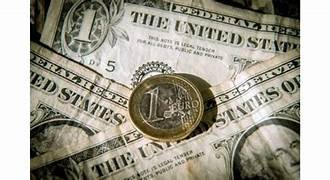
The US dollar staged a notable recovery on Monday, paring significant early losses against major currencies. This rebound came after President-elect Donald Trump denied a report claiming his administration’s tariff plans would be narrower than originally feared.
Dollar Decline Sparks Market Reaction
The Bloomberg Dollar Spot Index initially plummeted by more than 1%, marking its steepest intraday drop in over a year. This sharp decline was triggered by a Washington Post report alleging that Trump’s team was considering a tariff program limited to critical imports, instead of the broader scope previously suggested.
Amid the turmoil, the euro surged by 1.2%, experiencing its largest single-day gain since August. Simultaneously, the British pound advanced by as much as 1%, reflecting growing investor sentiment against the greenback.
Market Analysts Weigh In
Kathleen Brooks, Director of Research at XTB, commented on the dollar’s initial losses, labeling them as “an outsized reaction to an unverified report.” She emphasized that the movement underscored market sensitivities, adding, “We’ve had a large buildup of dollar longs, and they are at risk of a turnaround.”
Trump’s Denial Calms Market Fears
In a swift response, Trump took to Truth Social to reject the Washington Post’s claims, stating the report was “wrong” about the potential softening of his tariff policies. His assurance helped stabilize the markets, with traders unwinding some currency bets and retracing gains in bonds.
Additionally, Trump emphasized his commitment to robust trade policies, citing the example of United States Steel Corp. He argued that under his proposed tariff structure, the company would become “more profitable and valuable.” This assertion highlighted his broader agenda to prioritize American industries.
Impact of Narrower Tariff Plans on the Dollar
The dollar has traditionally benefited from expectations of sweeping tariffs aimed at major US trading partners, which tend to weaken rival currencies like the euro and yuan. However, a more targeted approach—focusing on key sectors such as the defense industrial supply chain—could reduce global economic disruptions and inflationary pressures. Such a scenario would likely limit the dollar’s strength, offering room for further declines.
Universal Tariff Program Considerations
Adding to the uncertainty, the Washington Post reported that Trump’s team is also exploring a universal tariff program that would apply to all countries. This sweeping measure could significantly alter the global trade landscape, with far-reaching consequences for the dollar and other major currencies.
Strategists Highlight Inflation Risks
Goldman Sachs foreign-exchange strategists, including Stuart Jenkins, Michael Cahill, and Isabella Rosenberg, noted in a recent report that the incoming administration appears attuned to inflation risks. They suggested that a more targeted tariff approach would mitigate some of the inflationary pressures associated with broader trade restrictions.
“All in all, the reports suggest that the incoming administration is considering a more measured initial step than the campaign proposals,” they wrote, reflecting cautious optimism about the policy direction.
Broader Implications for Global Growth
Since Trump’s election victory in November, his trade policies have been a focal point for investors and economic policymakers. A comprehensive tariff program could dampen global economic growth, escalate consumer prices, and provoke retaliatory measures from affected trading partners.
Jane Foley, Head of Currency Strategy at Rabobank in London, emphasized the potential for heightened market volatility. “While any watering down of tariffs would be seen as reducing inflation risks, there is still a lot of uncertainty over tariffs and what would be designated as ‘critical’ goods,” she stated.
Upcoming Economic Indicators
Investors are now turning their attention to the US December non-farm payrolls report, set to be released on Friday. This key economic indicator is expected to provide further insights into the Federal Reserve’s monetary policy trajectory.
Market participants have already adjusted their expectations for interest rate cuts, pricing in approximately 40 basis points of Fed easing in 2025, up from 38 basis points prior to the tariff report.
Navigating Market Uncertainty
As the Trump administration prepares to take office, the currency markets are bracing for a period of increased volatility. The evolving nature of trade policies, coupled with the broader economic implications, underscores the importance of staying informed and agile in the face of uncertainty.
Key Takeaways for Investors
- Monitor Policy Developments: Stay updated on announcements from the incoming administration to gauge the impact on currency markets.
- Focus on Economic Indicators: Pay close attention to upcoming data, such as the non-farm payrolls, for clues on Federal Reserve policy shifts.
- Diversify Investments: Consider strategies to mitigate risks associated with heightened market volatility.