
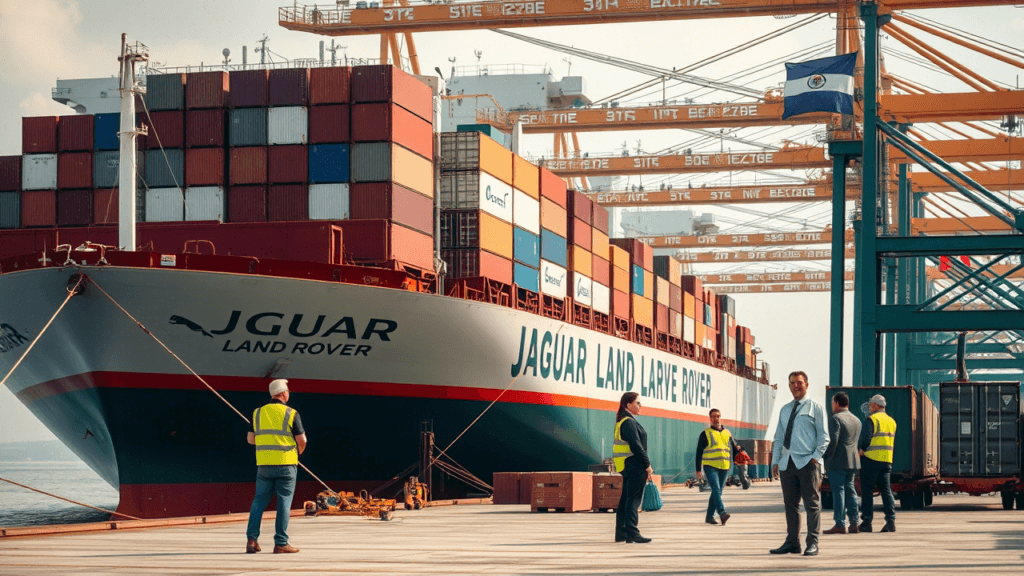
Jaguar Land Rover Suspends April Shipments to U.S. Amid Trade Tensions
In a significant move with broad implications for the auto industry, Jaguar Land Rover (JLR) has announced a temporary pause in vehicle shipments to the United States throughout April 2025. This decision comes as the British automotive giant grapples with the newly imposed 25% tariff on imported vehicles by the U.S. government, part of a broader realignment of transatlantic trade policies.
JLR emphasized the strategic nature of this pause, citing the need to restructure and recalibrate its operational approach to the U.S. market under these new trade conditions. “The USA is an important market for JLR’s luxury brands,” the company said in a statement. “As we work to address the new trading terms with our business partners, we are taking some short-term actions including a shipment pause in April, as we develop our mid-to-longer term plans.”
U.S. Tariffs Trigger Industry-Wide Alarm in the U.K.
The new tariff regime has cast a shadow over the already fragile U.K. automotive sector, which has been navigating a turbulent phase marked by falling domestic demand, Brexit-related uncertainties, and the urgent need to shift toward electric mobility.
Mike Hawes, Chief Executive of the Society of Motor Manufacturers and Traders (SMMT), voiced grave concerns: “The industry is already facing multiple headwinds and this announcement comes at the worst possible time.” Hawes further stated that ongoing dialogues with the government are crucial to securing a trade framework that safeguards jobs and economic ties between the two nations.
British Car Production Declines Sharply Amid Global Pressures
According to the latest data released by SMMT, U.K. vehicle production fell by 13.9% in 2024, totaling 779,584 vehicles, the majority of which—over 77%—were built for export markets. With the U.S. being the largest export destination outside the EU, any trade disruption reverberates across the entire British car manufacturing ecosystem.
Stockpiling Strategy Temporarily Cushions Impact
In a preemptive move, automakers including JLR accelerated exports to the U.S. in the months leading up to the tariff implementation, seeking to soften the blow of the impending duty. Official figures show a 38.5% increase in exports to the U.S. in December, followed by 12.4% in January and 34.6% in February.
“This was manufacturers like JLR trying to get ahead of the game in terms of getting inventory to the U.S. before the tariffs were implemented,” noted David Bailey, Professor of Business Economics at the University of Birmingham. These stockpiles are expected to sustain U.S. dealerships temporarily, but the pause in shipments could create inventory shortages by summer if a resolution isn’t reached.
Jaguar Land Rover’s Strategic Pivot: Navigating a New Trade Era
JLR’s decision to halt shipments is not merely a reactive measure. The company is engaged in deep strategic planning, looking to develop sustainable, long-term solutions to the challenges posed by the U.S. tariffs. Potential steps may include:
- Localization of production in North America to avoid import duties.
- Revised pricing structures to absorb or share the cost burden with consumers.
- Diversification of export markets beyond the U.S. to mitigate risk.
- Accelerated investment in electric vehicle production, which may be less vulnerable to tariffs depending on future bilateral trade arrangements.
The Larger Economic Picture: What’s at Stake
British automakers exported £8.3 billion ($10.7 billion) worth of cars to the United States in the 12 months through September 2024, making cars the largest single goods export to the U.S. from the U.K. Despite this, cars still represent a small fraction of the total trade between the two countries, with services accounting for 68.2% of Britain’s £179.4 billion ($231.2 billion) exports to the U.S. during the same period.
This imbalance underlines the strategic vulnerability of U.K. car exports, especially in an era of shifting trade alliances and increasing protectionism.
U.K. Government Faces Mounting Pressure to Respond
As the repercussions of the U.S. tariffs ripple through the U.K. economy, political and industry leaders are urging the British government to act swiftly. There is growing demand for:
- Bilateral trade negotiations aimed at tariff exemptions or reductions.
- Targeted support for the auto industry, including tax incentives and transition funds.
- Strengthening domestic demand through infrastructure projects and EV adoption schemes.
Failure to act could risk a long-term erosion of the U.K.’s position in the global automotive export market.
Dealerships and Consumers Brace for Price Shocks and Delays
The shipment freeze is likely to affect Jaguar and Land Rover dealership inventories across the U.S., with anticipated vehicle shortages, especially for popular models such as the Range Rover Velar, Defender, and Jaguar F-Pace. Dealerships may face delays in fulfilling customer orders, while vehicle prices could increase as a result of higher import costs and limited supply.
Consumers are encouraged to act quickly if they plan to purchase a new JLR vehicle in the coming months, as prices and availability are both expected to fluctuate.
The Road Ahead: Will the Pause Become a Turning Point?
The current crisis may serve as a catalyst for transformation at Jaguar Land Rover and across the broader British automotive industry. While the immediate halt in shipments is a short-term setback, it also presents an opportunity for long-term reinvention and resilience-building.
As JLR redefines its transatlantic strategy, investments in electric mobility, AI-driven manufacturing, and market diversification will likely play central roles in shaping the next chapter for this iconic British brand.