


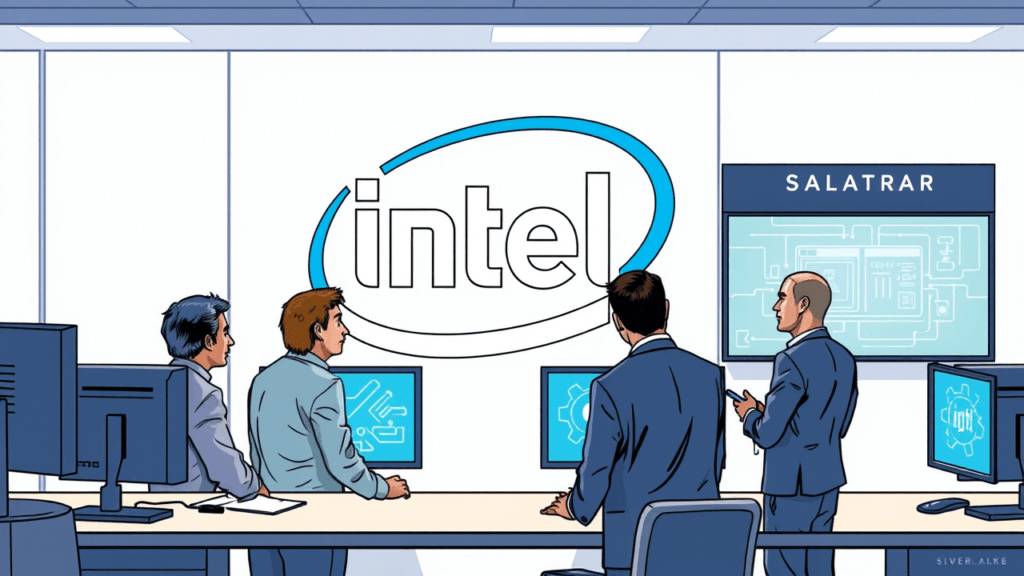
In a bold move aimed at revamping its corporate strategy and improving its financial position, Intel Corporation has announced the sale of a 51% stake in its programmable chip unit, Altera, to Silver Lake Management, a leading global technology investment firm. The transaction values Altera at $8.75 billion, a significant discount from the $16.7 billion Intel paid to acquire the company in 2015.
A Strategic Shift in Intel’s Business Model
Intel’s decision to offload a majority stake in Altera is part of a broader strategic transformation. The chipmaker, once a titan of the semiconductor world, has been under increasing pressure due to rising competition, lagging innovation, and a failure to fully capitalize on the surging demand for AI and machine learning technologies. With this move, Intel aims to streamline operations, reduce its expense structure, and sharpen its focus on core business areas.
According to Intel’s recently appointed CEO Lip-Bu Tan, this decision underscores the company’s commitment to “strengthening its balance sheet and unlocking value for shareholders.” Intel will retain a 49% ownership stake in Altera, ensuring it remains connected to the growth potential of programmable logic devices (PLDs) while reducing its operational burden.
Leadership Change Signals New Direction for Altera
The spinout of Altera comes with a major leadership reshuffle. Raghib Hussain, the current President of Products and Technologies at Marvell Technology Inc., will step in as CEO of Altera, replacing Sandra Rivera, who will return to focus on other Intel initiatives. Hussain brings deep industry experience and a track record of innovation that aligns with Altera’s new independent trajectory.
Silver Lake Chairman Kenneth Hao emphasized that the firm’s investment in Altera represents a “once-in-a-generation opportunity” to scale a leader in advanced semiconductors. He added that the newly independent Altera will be positioned to explore emerging AI-driven markets, particularly edge computing, robotics, and data infrastructure.
Repositioning Altera for AI and Edge Computing Dominance
Altera has long been known for its field-programmable gate arrays (FPGAs), which are flexible semiconductors primarily used in telecommunications, data centers, and industrial applications. Under Intel’s ownership, Altera remained a powerful but somewhat under-leveraged asset, particularly as the market shifted toward AI accelerators and custom silicon solutions.
The new leadership under Raghib Hussain is expected to reignite innovation within the company. Altera will now be able to operate with greater agility, free from Intel’s broader corporate structure, and will have the backing of Silver Lake’s extensive capital and industry expertise. This change allows the company to directly target AI applications, develop low-latency solutions for the edge, and expand its presence in high-growth sectors that demand reconfigurable computing capabilities.
Intel’s Broader Strategy to Recover Market Share
Intel’s divestiture is not occurring in isolation. In 2024, Intel publicly acknowledged its intention to restructure and divest non-core assets. This move follows a series of missteps, including delays in chip production, loss of market share to AMD, and a failure to compete effectively with Nvidia in the AI chip space.
Under Lip-Bu Tan’s leadership, Intel is now focused on revamping its foundry services, developing custom semiconductors, and aligning its engineering talent with future technological demands. The company has acknowledged the urgent need to rebuild its talent pool, modernize its manufacturing process, and deliver solutions that match customer expectations.
Intel’s decision to part ways with Altera indicates a strategic prioritization of areas where the company believes it can still lead, such as x86 CPUs, server processors, and integrated AI platforms. The proceeds from the Altera sale are expected to be redirected toward these core operations and R&D investments.
Private Equity’s Bet on Resilient Tech Amid Economic Shifts
The Altera transaction also highlights a broader trend in private equity investment, where firms like Silver Lake are increasingly targeting resilient, high-tech assets that can weather economic uncertainty and geopolitical tensions. Despite a slowdown in deal activity globally due to trade tensions and macroeconomic volatility, Silver Lake’s acquisition underlines investor confidence in the future of programmable semiconductors.
With over $700 billion in unallocated capital, private equity is aggressively hunting for technology assets that can scale rapidly and capitalize on AI’s explosive growth. Altera fits this mold, offering robust IP, scalable products, and an established market presence—all critical elements for post-pandemic growth in tech.
Market Response and Future Outlook
Following the announcement, Intel shares climbed by as much as 4.3% in early trading on the New York Stock Exchange, signaling investor approval of the transaction. Analysts view the deal as a positive step toward restoring Intel’s competitiveness and a smart way to unlock hidden value in a legacy asset.
Looking ahead, Intel’s remaining stake in Altera allows it to participate in future upside potential while reducing exposure to non-core risks. Meanwhile, Altera, under Silver Lake’s majority ownership and fresh leadership, will have the flexibility and funding to pivot quickly, innovate boldly, and capture emerging market share in AI, 5G, and beyond.
A Decade After the Acquisition: Lessons and Legacies
When Intel acquired Altera in 2015 for nearly $17 billion, it was seen as a landmark deal designed to solidify Intel’s position in the programmable logic market. A decade later, the semiconductor landscape has dramatically shifted. AI, not PLDs, has become the center of the computing universe, and Intel’s acquisition, while strategic at the time, failed to deliver the competitive moat the company had envisioned.
Now, by spinning off Altera, Intel is acknowledging that focus and agility are key in today’s fast-moving tech environment. This transaction, though reflective of a write-down in value, could mark a new era for both companies—Altera, now independent and innovation-driven; and Intel, leaner, more focused, and hopefully, more competitive.