
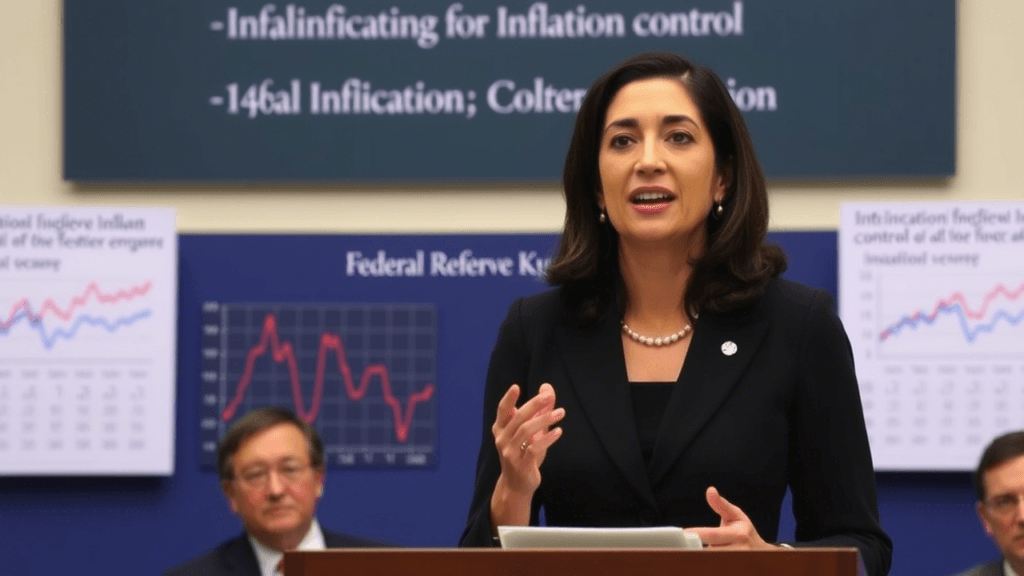
Fed’s Unyielding Commitment to the 2% Inflation Target
At a recent lecture on inflation dynamics delivered at Harvard University, Federal Reserve Governor Adriana Kugler made it abundantly clear: the Federal Reserve’s top priority is to prevent a resurgence in inflation. Addressing the recent uptick in both goods and market-services inflation, she emphasized that some of these price shifts may be “anticipatory” in nature, potentially influenced by ongoing trade and tariff policies.
Kugler highlighted that while short-term inflation expectations have edged up, long-term expectations remain well-anchored, a factor that reinforces the Fed’s current stance. Maintaining the 2% inflation target is not just a policy framework—it is a strategic commitment that reflects the central bank’s resolve to shield households and the broader economy from the erosive effects of price instability.
Tariffs and Inflation: Understanding the Link
During her remarks, Kugler drew attention to how tariff policies, particularly those emerging from the Trump administration’s recent economic directions, are having measurable effects on core import prices. She noted that in modeling inflation, it’s crucial to examine not just supply-demand factors but also indices like the shortages index, which give insight into bottlenecks and upstream pressures.
Kugler stated, “If you think about tariffs, for example, this measure of core import prices but also the shortages index may be really important to consider.” These dynamics suggest that inflation pressures may not solely stem from demand-side consumption but also from import costs, which businesses may gradually pass on to consumers.
Household Impact: The Human Side of Inflation
Addressing concerns raised by the audience regarding the household burden of rising prices, Kugler refrained from commenting on the validity of tariffs themselves. Instead, she redirected the discussion to the economic pain households experience when prices surge unexpectedly. This, she said, is why the Fed must remain vigilant, particularly during periods of potential economic transition.
Kugler added, “I understand the pain to households from rising prices, and that is why we need to keep our focus on that.” Her remarks underscore the importance of monetary policy acting as a stabilizing force, especially when fiscal policies such as tariffs may inject new uncertainties into the price landscape.
Inflation Dynamics in 2025: The Bigger Picture
To put her comments in context, it is essential to recognize that inflation dynamics in 2025 are not isolated phenomena. Global supply chains, geopolitical tensions, and energy market fluctuations have all contributed to the complexity of inflation forecasting. Kugler’s focus on “anticipatory” inflation suggests that markets are responding not only to current data but also to future expectations of policy impacts.
This forward-looking approach aligns with the Fed’s broader strategy: using interest rate adjustments and monetary tools not just reactively, but proactively, to ensure inflation does not become entrenched or spiral beyond control.
Short-Term vs Long-Term Inflation Expectations
A critical distinction that Kugler made was between short-term inflation expectations—which have recently risen—and long-term expectations, which remain steady. This disparity is important for two reasons:
- Short-term rises may reflect temporary disruptions, such as weather, trade policies, or seasonal supply shortages.
- Stable long-term expectations indicate that the Fed’s credibility remains intact and that markets trust its ability to navigate inflation back to target.
This trust is essential because inflation expectations influence wage negotiations, consumer spending, and business investment decisions. If people expect inflation to stay high, their behavior could reinforce higher inflation, creating a self-fulfilling cycle the Fed must avoid.
Kugler’s Economic Philosophy: Data-Driven and Forward-Focused
Kugler’s approach is grounded in data, research, and transparency. Her remarks at Harvard reflected a deep understanding of the nuanced factors influencing inflation, including:
- Core import prices
- Supply chain disruptions
- Tariff-induced cost-push inflation
- Market services volatility
Her academic background and practical experience have shaped her into a central figure within the Fed who balances empirical evidence with proactive policy engagement.
Business Reactions and Consumer Pricing
When questioned about how much of the increased costs from tariffs would be passed on to consumers, Kugler expressed caution. She acknowledged that some cost transmission is inevitable, but the extent is still unfolding. Businesses, facing tighter margins, may look to preserve profitability by adjusting prices, wages, or even investment strategies.
This uncertainty amplifies the need for the Fed to monitor inflation trends closely and to engage with stakeholders—businesses, labor, and households—to ensure the economic recovery remains on stable footing.
Maintaining Inflation Expectations: Why It Matters
Maintaining anchored inflation expectations is one of the Federal Reserve’s most important roles. When the public trusts that the Fed will keep inflation under control, it creates economic stability. Households can plan their budgets, businesses can set prices confidently, and investors can allocate capital more efficiently.
Kugler’s emphasis on this point was clear: “We all remain committed to our 2% target and want to keep inflation expectations well anchored, which should be a priority now.”
This is not just a theoretical goal—it is a practical mandate that guides interest rate decisions, balance sheet strategies, and the Fed’s broader communication with the public.
The Road Ahead for the Federal Reserve
With inflation showing signs of upward pressure, but longer-term metrics still stable, the Fed finds itself in a delicate balancing act. It must weigh the impact of domestic policies, such as tariffs, alongside external risks like global conflict and commodity shocks. Kugler’s remarks signal that the Fed is fully engaged in anticipating inflation triggers and is not waiting for data to worsen before acting.
As we move through 2025, the Federal Reserve’s vigilance will be critical in preventing inflation from re-accelerating. This involves:
- Maintaining a data-driven policy approach
- Communicating clearly to markets and households
- Acting decisively when inflation indicators show persistent deviation from the 2% target
In conclusion, Adriana Kugler’s statements serve as both a warning and a reassurance—a warning that inflationary pressures could grow if not contained, and a reassurance that the Fed remains steadfast in its mission to protect economic stability.