
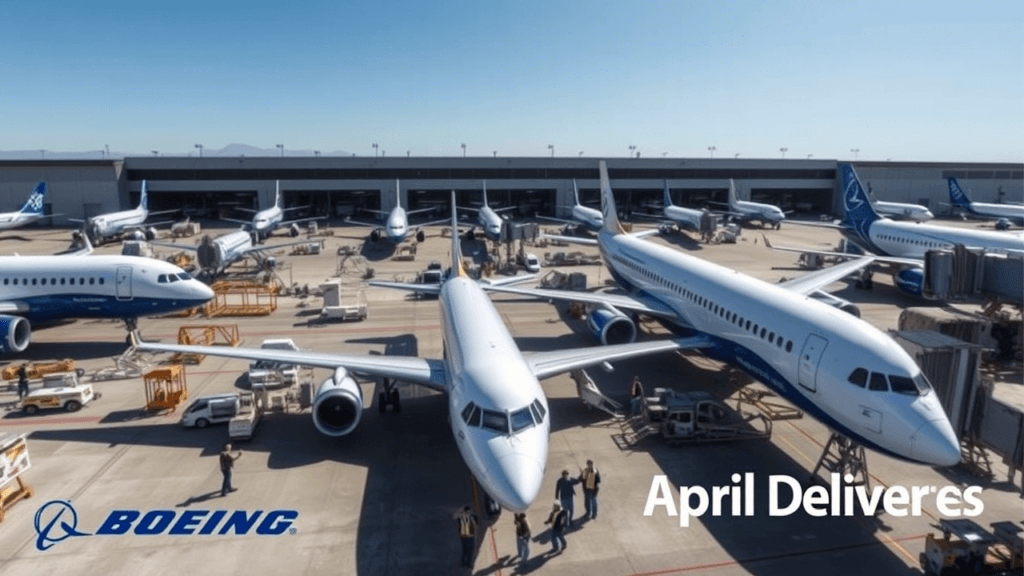
Boeing’s April Aircraft Deliveries Surge Significantly
Boeing has reported a substantial increase in commercial aircraft deliveries for April 2025, marking a critical milestone in its post-crisis recovery journey. The U.S. aerospace giant delivered 45 commercial jets, almost double the 24 jets it delivered in the same month of 2024. This jump not only signals Boeing’s improving operational stability but also reflects a broader industry rebound, despite ongoing global trade tensions and internal production challenges.
Deliveries are a key financial indicator for aircraft manufacturers, as final payments are typically collected upon delivery. For Boeing, grappling with years of production disruptions, grounded fleets, and mounting debt, a consistent delivery pace is essential for restoring cash flow and investor confidence.
April Deliveries: A Closer Look at Aircraft Types and Clients
In April alone, Boeing delivered:
- 29 units of the 737 MAX, its bestselling narrow-body aircraft
- 8 Dreamliner 787s, including versions 8, 9, and 10
- 4 777 freighters, a staple of global cargo logistics
- 3 767 aircraft, serving both commercial and cargo purposes
Among the 737 MAX deliveries, United Airlines received 8, Ryanair took delivery of 5, and Southwest Airlines added 5 more to its fleet. The numbers reflect strong demand for short to medium-haul jets, particularly in North America and Europe.
Chinese Airlines Take Delivery Before Trade Freeze
Interestingly, Boeing managed to deliver two aircraft to Chinese carriers in April before the Chinese government ordered a temporary halt on further deliveries due to escalating U.S.-China trade tensions.
One of these deliveries included a 777 freighter to CES Leasing Corp., part of China Eastern Airlines Group. The other was a 737 MAX to China Southern Airlines. However, following renewed tariff threats from the U.S., four other 737 MAX aircraft bound for China were flown back to Seattle from Boeing’s Zhoushan completion center and are now parked in Moses Lake, Washington.
Strong Start to the Year: 175 Deliveries in First Four Months
Between January and April 2025, Boeing has delivered:
- 133 737 MAX
- 21 Boeing 787s
- 11 777 freighters
- 10 other widebody and cargo jets
With 175 total aircraft deliveries in just four months, Boeing is building momentum, especially with the 737 MAX line, which suffered significant reputational and mechanical setbacks over the past few years.
This consistent delivery pace for four consecutive months of 40+ deliveries underscores Boeing’s efforts to stabilize its assembly lines, reduce bottlenecks, and meet global demand.
New Orders Indicate Growing Market Confidence
Boeing’s order book also saw modest growth in April:
- 8 gross new orders for the 737 MAX, placed by unidentified customers
- No cancellations or conversions, which is a positive sign amid industry volatility
- 32 previously tentative orders were officially added to the firm backlog, following updated accounting treatments
By April 30, Boeing recorded:
- 249 gross orders
- 212 net orders after adjusting for cancellations and conversions
- 6,282 unfilled orders
- 5,643 official backlog, adjusted per U.S. financial reporting rules
These numbers reflect healthy demand, particularly for single-aisle aircraft, and a slowly recovering customer base.
Airbus vs Boeing: The Competitive Landscape
In comparison, Airbus delivered 56 jets in April and booked 11 new orders, keeping its lead in total monthly output. However, Boeing continues to close the gap, especially with its long-haul aircraft offerings and strategic orders.
For instance, in May, Boeing scored a major win with British Airways’ parent company, IAG, ordering 32 Boeing 787-10 Dreamliners. Meanwhile, Airbus secured an order for 21 A330-900neo aircraft.
This competition reflects a healthy duopoly, where both manufacturers are benefitting from increased airline spending post-COVID and amid a surge in global air travel.
737 MAX: Still Boeing’s Workhorse Despite Setbacks
The 737 MAX remains the cornerstone of Boeing’s commercial strategy. Despite facing grounding orders, production halts, and reputational damage in the past few years, Boeing has gradually rebuilt customer trust and resolved quality issues.
In 2024, production of the 737 MAX was disrupted by fuselage quality defects and supply chain constraints. By early 2025, the company has stabilized the rate and resumed deliveries across all key regions, especially to budget airlines in the U.S. and Europe.
Widebody Demand and Freighter Sales Remain Strong
Freighters and widebody aircraft like the 787 Dreamliner and 777F are increasingly critical for Boeing, given the continued rise in global cargo and long-haul travel.
Boeing’s freighter line remains unmatched, with major logistics firms and international airlines relying heavily on the 767F and 777F platforms. The 787’s fuel efficiency and range also make it highly desirable among carriers upgrading their aging fleets.
Challenges Ahead: Trade Tensions and Supply Chain Risks
Despite strong numbers, Boeing faces multiple headwinds:
- U.S.-China trade conflict threatens future orders and deliveries
- Supply chain vulnerabilities still pose risks to production rates
- Labor negotiations and talent shortages could disrupt assembly lines
- Airworthiness certifications for new variants, such as the 737 MAX 10, are pending regulatory approval
While Boeing’s April performance is promising, long-term stability requires resolving geopolitical, regulatory, and production-related issues.
Investor Outlook: Optimism Rises with Consistency in Deliveries
Wall Street analysts closely monitor monthly delivery figures, as they directly impact cash inflows and shareholder returns. With 45 aircraft delivered in April and strong year-to-date figures, investor sentiment is improving, although caution persists due to ongoing macroeconomic uncertainty.
Boeing CEO Kelly Ortberg reiterated during the Q1 earnings call that approximately 50 aircraft deliveries are expected to China this year, representing 10% of Boeing’s commercial backlog. That forecast is now in doubt unless geopolitical tensions de-escalate.
Conclusion: Boeing Gains Ground but Must Sustain Momentum
April 2025 marks a turning point for Boeing as it regains delivery pace, secures new orders, and demonstrates production resilience. While Airbus still leads, Boeing’s focus on stabilizing 737 MAX output and expanding widebody sales is setting the stage for a strong recovery year.
If Boeing can navigate political and operational risks, the company may finally be poised to reclaim its dominant position in the commercial aviation market.