
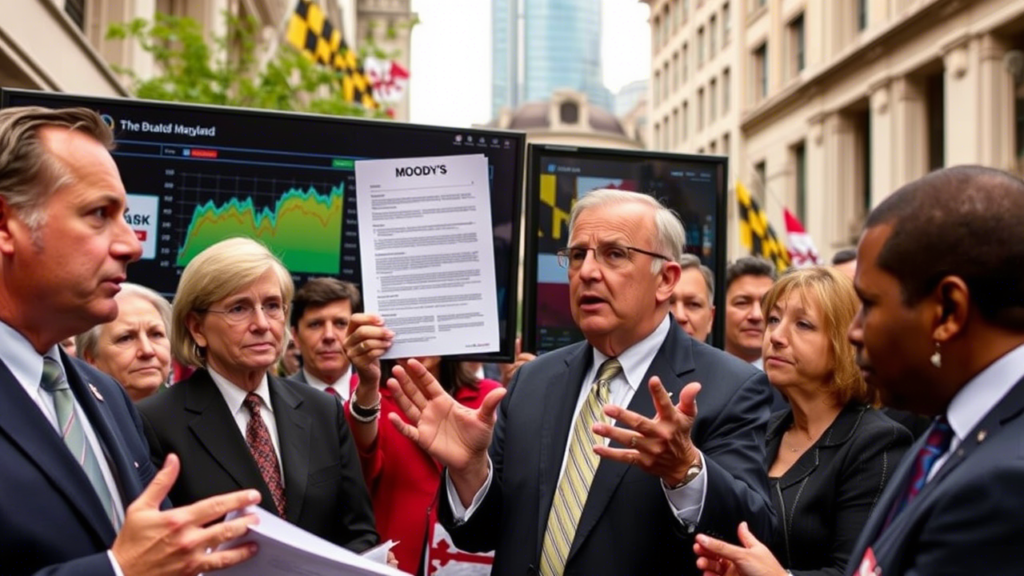
Maryland Loses Historic Triple-A Bond Rating After 50 Years
Maryland’s long-standing reputation for fiscal responsibility has taken a hit as credit rating agency Moody’s Investors Service downgraded the state’s bond rating from the coveted Aaa (Triple-A) status to Aa1, marking a significant turning point in the state’s economic profile. The downgrade, announced on Wednesday, ends a 50-year streak during which Maryland proudly held the highest possible credit rating from Moody’s since 1973.
This rating had been a cornerstone of the state’s financial strategy, enabling low-cost borrowing for infrastructure projects such as transportation systems, school construction, and public facilities. Now, Maryland may face higher interest rates on future bond issuances, placing pressure on an already strained budget.
Reasons Behind Moody’s Downgrade of Maryland’s Credit
Moody’s cited multiple factors behind the downgrade. The primary concern revolves around Maryland’s economic and financial underperformance when compared to other Aaa-rated states. This underperformance is projected to persist due to:
- Heightened vulnerability to shifts in federal employment and policy
- Elevated fixed costs related to pensions and healthcare
- Increasing exposure to reductions in federal funding
Moody’s emphasized that Maryland’s dependency on the federal government makes it more susceptible to economic shocks. These vulnerabilities are exacerbated during times of political transition or federal budget cuts—precisely the circumstances currently unfolding under the administration in Washington.
Federal Cuts and Layoffs Blamed for the Downgrade
Maryland Governor Wes Moore, alongside top Democratic officials including Comptroller Brooke Lierman and Treasurer Dereck Davis, placed the blame squarely on the federal government’s workforce reductions, which they claim have devastated the local economy.
“To put it bluntly, this is a Trump downgrade,” Moore declared in a joint statement, referencing the mass layoffs of federal employees enacted under former President Donald Trump’s administration.
They argue that recent federal decisions have disproportionately harmed Maryland and the greater Washington D.C. region, both of which rely heavily on federal employment. Notably, the District of Columbia also recently experienced a similar credit downgrade, further supporting the Democrats’ claims of a regional economic pattern.
Republicans Point to State Mismanagement and Overspending
However, Republican leaders in Maryland offer a starkly different interpretation. Senate Minority Leader Steve Hershey blasted the downgrade as a direct consequence of the Moore administration’s fiscal mismanagement.
“Donald Trump didn’t downgrade Maryland’s bond rating — Annapolis Democrats did,” Hershey said. “This is the result of reckless spending, bloated budgets, and an economy hollowed out by overregulation and an overreliance on federal support.”
Republicans argue that instead of correcting Maryland’s financial trajectory, Democratic leaders have increased taxes, expanded state budgets, and failed to cultivate a resilient, diversified economy.
Maryland’s Recent Budget Crisis and Efforts to Restore Fiscal Balance
Earlier this year, Maryland lawmakers faced a daunting $3.3 billion budget deficit for the upcoming fiscal year. In response, they enacted a series of controversial measures, including:
- Raising taxes
- Implementing significant budget cuts
- Transferring funds between departments and reserves
Despite these efforts, Moody’s determined that these corrective actions were not enough to insulate the state from external economic pressures and internal fiscal risks.
Democratic officials were quick to point out that Moody’s did acknowledge the progress made in addressing the deficit, though the state’s structural vulnerabilities ultimately outweighed these improvements in the final assessment.
Heightened Sensitivity to Federal Spending Decisions
According to previous reports from Moody’s, no other U.S. state is as exposed to changes in federal budgets as Maryland. Over 300,000 Maryland residents are federal employees or government contractors. The volume of federal dollars flowing into the state’s economy significantly affects local businesses, tax revenues, and employment levels.
This deep connection to the federal workforce makes any cutbacks in Washington directly impactful to Maryland’s economic stability, and as a result, its creditworthiness. Moody’s warned earlier in the year that continued reductions in federal contracts, agency budgets, or headcount could undermine Maryland’s future fiscal outlook.
State Government Implements Monitoring of Federal Impacts
In an attempt to respond proactively, Maryland lawmakers have passed legislation directing the Governor’s budget office to:
- Monitor the effects of federal spending cuts
- Alert the legislature if economic losses exceed $1 billion
- Recommend strategies to mitigate these impacts
This move demonstrates the state’s intention to maintain transparency and readiness, but critics argue it’s reactive rather than preventative.
Maryland’s Credit Rating Still Among the Nation’s Best
While the downgrade is certainly a blow to the state’s prestige, Maryland still retains one of the highest credit ratings in the country. The Aa1 rating from Moody’s, while a notch below Aaa, is still considered excellent investment grade, signifying strong financial backing and responsible debt repayment.
“As we have for decades, we will always pay our debts,” read the joint statement from Maryland’s top Democratic officials. “And we will continue to invest in our people, infrastructure, and future.”
The state also maintains top ratings from other major credit agencies, including Standard & Poor’s and Fitch, providing some reassurance to investors and residents alike.
What This Means for Maryland Taxpayers and Infrastructure
With the downgrade in place, borrowing costs are likely to rise. This means future projects—such as school construction, road repairs, and environmental initiatives—could become more expensive to finance, potentially delaying or scaling back key public investments.
Moreover, taxpayers could bear the indirect costs of the downgrade through reduced services, increased taxes, or slowed infrastructure development.
Looking Ahead: Will Maryland Reclaim Its Triple-A Status?
Reclaiming the Aaa rating will not be easy. It will require:
- Diversification of the economy away from federal dependency
- Reduced fixed liabilities, particularly pensions and healthcare
- Increased efficiency in government spending
- Long-term structural budgetary reforms
Moody’s and other agencies will be closely monitoring the state’s performance in the coming quarters. If positive economic trends and fiscal discipline emerge, a return to Aaa status is possible.
For now, however, Maryland must grapple with the consequences of losing a half-century symbol of fiscal excellence—a moment that marks the end of an era and the beginning of a tougher financial reality.