
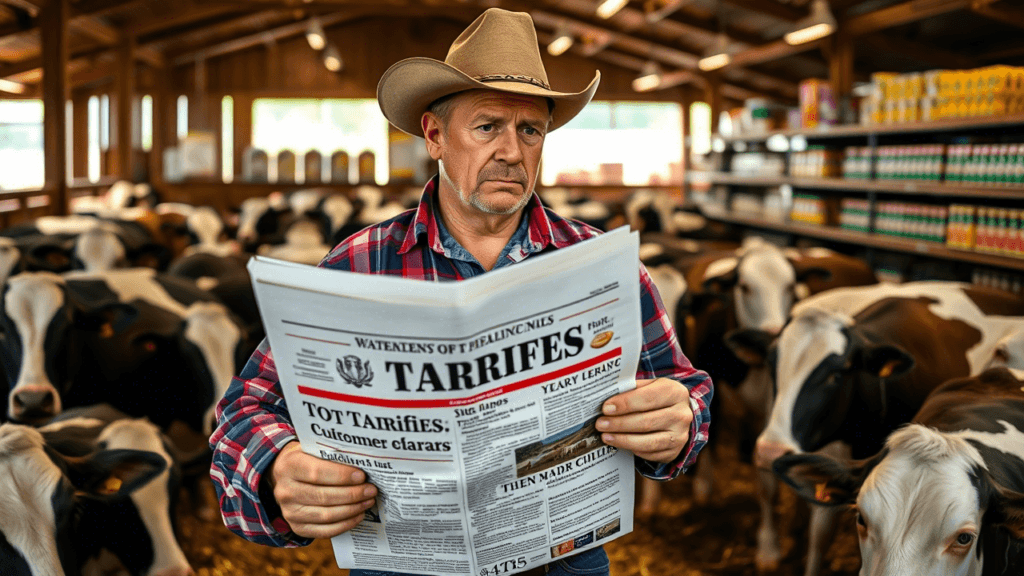
The ongoing trade war initiated by former President Donald Trump continues to pose a significant threat to the $8.2 billion American dairy export market. As the industry faces increasing challenges, retaliatory tariffs from key trading partners like China, Canada, and Mexico have created an uncertain future for U.S. dairy farmers and exporters. With rising production levels and a shrinking overseas market, the economic repercussions could be severe.
Impact of Trump’s Trade War on American Dairy Exports
The United States Department of Agriculture (USDA) reported that American dairy exports reached their second-highest level on record last year. However, recent tariff policies have jeopardized the industry’s expansion efforts, particularly in foreign markets where demand had been steadily growing.
Retaliatory Tariffs from Key Trading Partners
- Canada has imposed 25% tariffs on American cheese, butter, and dairy spreads.
- China has enforced 10% duties on select U.S. milk products.
- Mexico, the largest importer of American dairy, has also been targeted by the trade war, raising concerns about further disruptions.
As a result, dairy producers who had anticipated growth in international sales are now struggling with reduced demand and lower profit margins.
U.S. Dairy Industry Faces Oversupply and Price Declines
According to Shawna Morris, executive vice president of trade policy and global affairs at the National Milk Producers Federation, the U.S. market alone cannot absorb the surplus dairy production. The reliance on international exports is essential for maintaining stable prices and ensuring industry growth.
Recent market trends indicate declining prices for dairy contracts:
- Milk futures traded in Chicago dropped to their lowest level since April 2024.
- Whey prices hit a five-month low due to sluggish sales.
- The uncertainty surrounding tariffs has led to a downturn in investor confidence within the dairy sector.
Upcoming Tariff Announcements and Potential Industry Fallout
Trump is set to announce new reciprocal tariffs on trading partners, escalating tensions further. Additionally, delayed 25% tariffs on select products under the United States-Mexico-Canada Agreement (USMCA) are expected to take effect soon.
Industry leaders remain deeply concerned about the impact of these policies on dairy exports. Corey Geiger, lead dairy economist at CoBank’s research arm, warns that continued uncertainty and sluggish demand could further hurt U.S. dairy farmers.
Shipping Costs and Tariff Threats Add to Industry Woes
Beyond direct tariffs, proposed fees on Chinese-operated shipping vessels could substantially increase export costs. In a recent letter to the U.S. Trade Representative, the U.S. Dairy Export Council and the National Milk Producers Federation highlighted that nearly 40% of American dairy exports rely on maritime transport. Increased shipping costs would further reduce competitiveness, placing U.S. producers at a distinct disadvantage in global markets.
Canada’s Dairy Import Limits: A Long-Standing Concern
Another major hurdle for U.S. dairy exports is Canada’s restrictive dairy import policies. The country employs a supply management system that limits the amount of dairy that can enter under lower tariff rates. U.S. dairy farmers have long criticized this system, arguing that it unfairly restricts market access and hampers competition.
Despite Trump’s aggressive trade policies, industry experts remain divided on whether these measures will force Canada to open its dairy market further. However, the threat of escalating trade actions may put pressure on Canadian policymakers to reevaluate their dairy regulations.
Future Outlook: Can the U.S. Dairy Industry Recover?
While retaliatory tariffs are currently the primary concern, the dairy industry is also keenly watching how U.S. trade policies evolve. There is hope that the threat of tariffs could be leveraged to secure better trade agreements that benefit American dairy producers in the long run.
Key Challenges Ahead
- Tariff Uncertainty: The unpredictability of U.S. trade policies continues to deter global buyers.
- Declining Market Access: Retaliatory tariffs and higher shipping costs threaten U.S. competitiveness.
- Oversupply Issues: Without robust export markets, dairy producers may face significant financial losses.
Conclusion
The American dairy industry is at a critical juncture. The effects of Trump’s trade war have already begun to destabilize the market, leaving farmers and exporters scrambling to find solutions. If tariff disputes persist, U.S. dairy producers could face severe economic repercussions. The industry must now navigate this challenging landscape while advocating for policies that ensure fair trade practices and market access.